News
Dates
Here you will find information about dates when I will be giving presentations and lectures.

04.09.2026 DGHT LV Hamburg: Vom Meer bis in die Wolken – Streifzüge durch die Regenwälder Madagaskars
My presentation, “15 Years of Gecko Research in Madagascar,” given at the 2026 Gecko Conference in Hameln, was recorded and is available as a video on YouTube.
July, 12th 2026
In a new study we examined the species diversity within a group of Malagasy chameleons.
The study focuses on chameleons of the so-called Calumma cucullatum group, which are relatively common in the rainforests along Madagascar’s east coast and can be easily observed there. This group includes medium-sized to large chameleon species. They are typically characterized by large occipital lobes. Males also frequently have a single, solid, and ossified projection on their snout.
It has long been known that the previous classification of this group based on external characteristics does not fully correspond to genetic relationships. Although six new species from the Calumma cucullatum group were described as early as 2006, important questions regarding the exact classification of the species remained unanswered. In addition, other possible new species were discovered in the rainforests of northeastern Madagascar that had not yet been scientifically described.
The current study examined both mitochondrial and genome-wide genetic markers. This confirmed that the Calumma cucullatum group does not form a single phylogenetic clade. The genetic data also suggest that hybridization may have occurred frequently in the evolution of these chameleons. This makes the taxonomic situation particularly complex. In particular, Calumma brevicorne and Calumma crypticum continue to form a species complex whose exact classification has not yet been fully clarified.
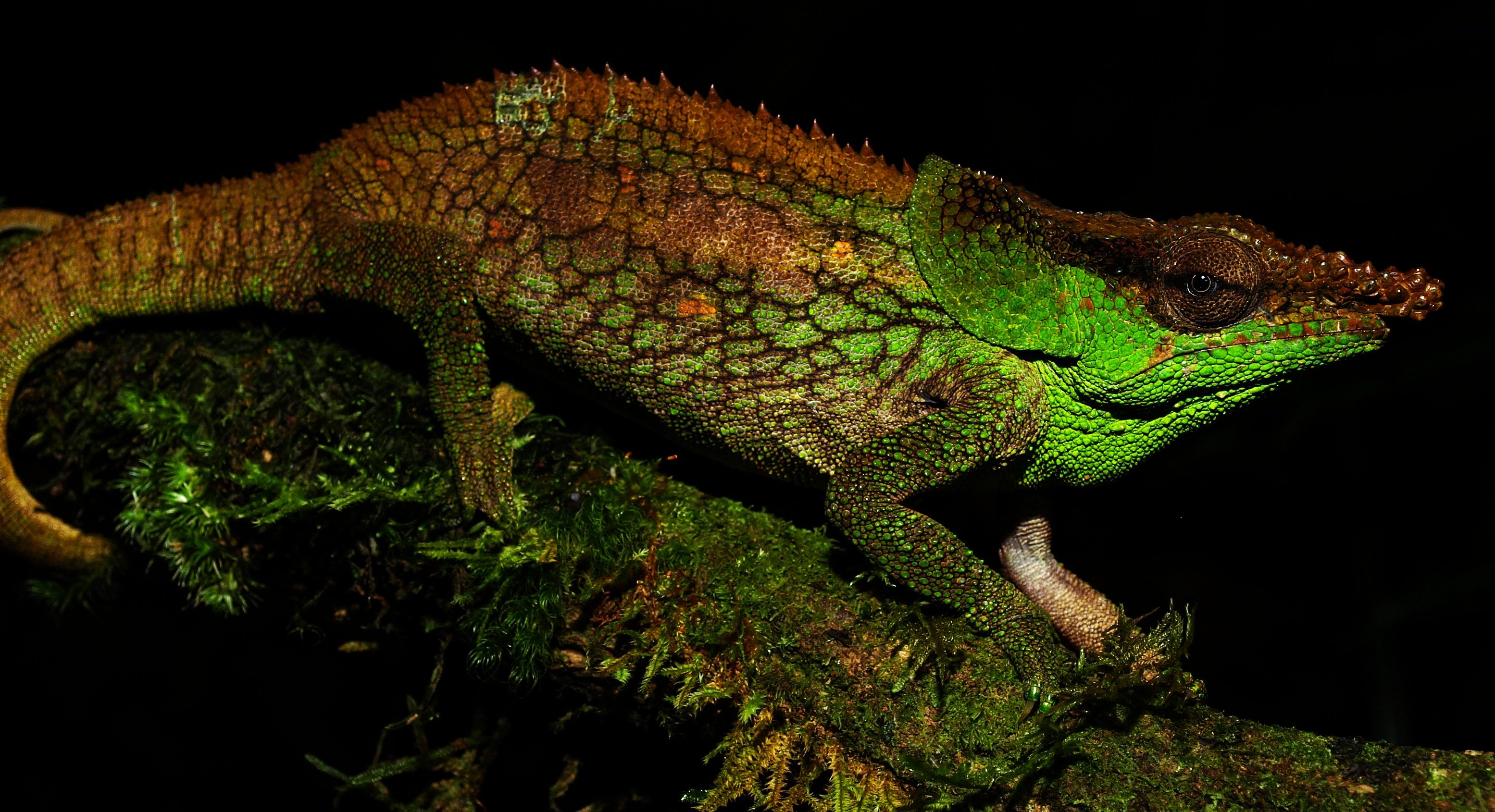
The results were clearer within the clade of Calumma malthe. Populations from northeastern Madagascar—for example, from Marojejy—consistently differ genetically and morphologically from other populations. Therefore, they could be described as a separate species.
The new species was named after the South African chameleon researcher Krystal Tolley and bears the scientific name Calumma krystalae.
If you would like to learn more about the study, you can find the original paper here: https://www.sciencedirect.com/science/article/pii/S1055790326001594
March, 10th 2026
Spring in the light well
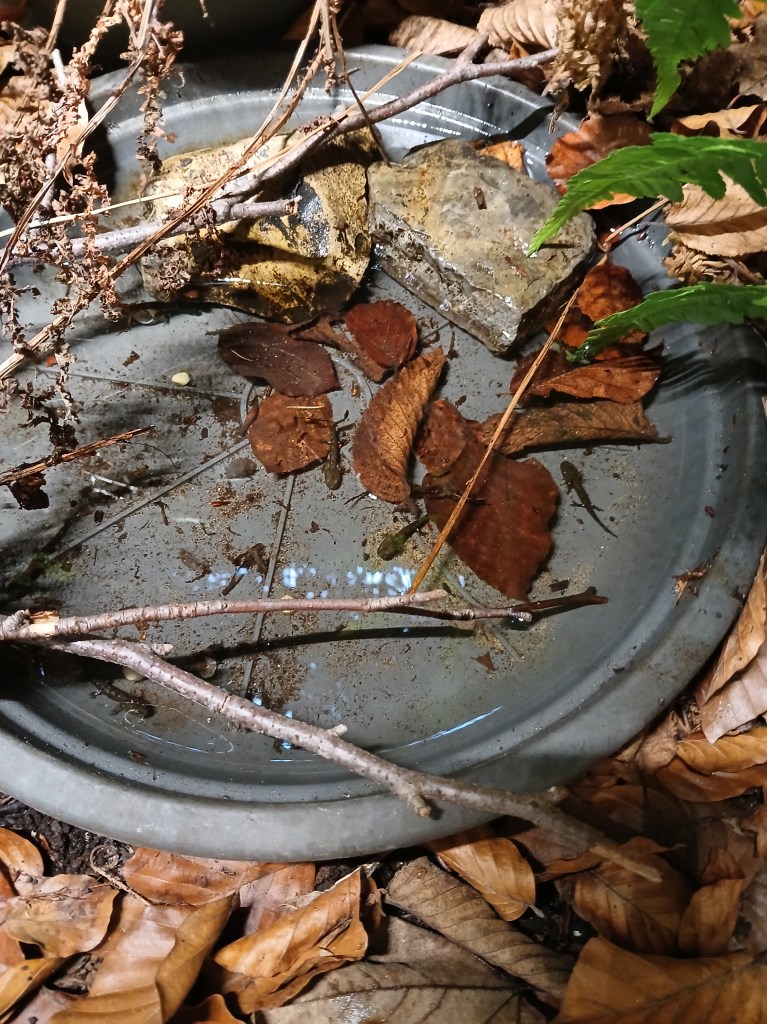
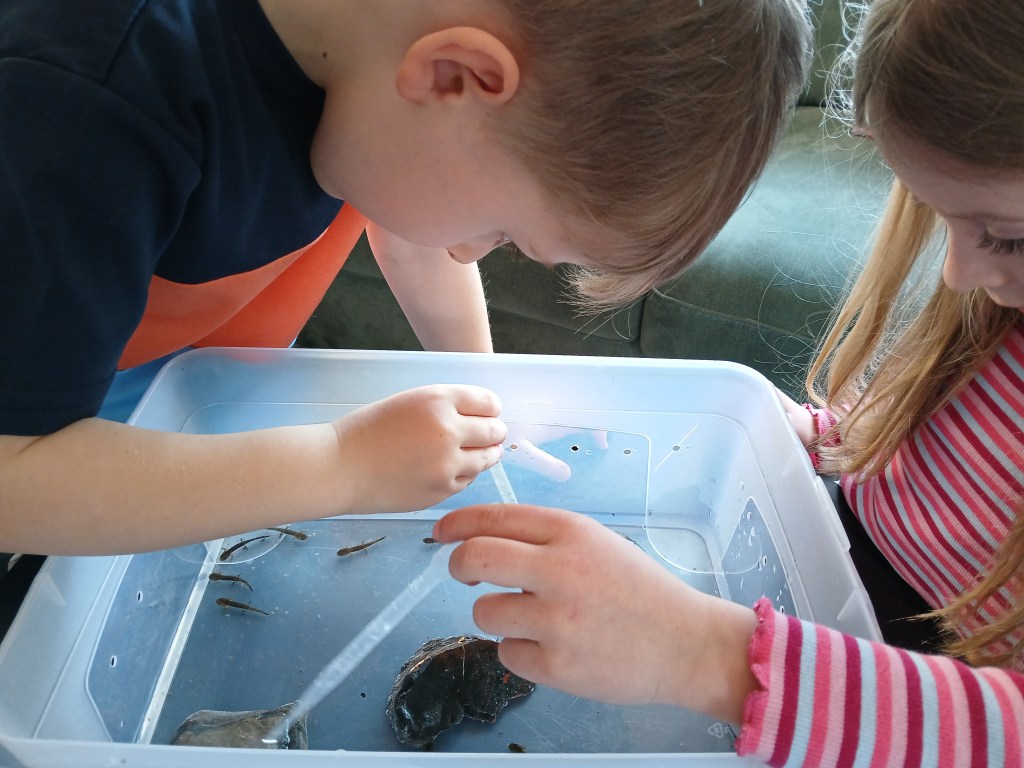
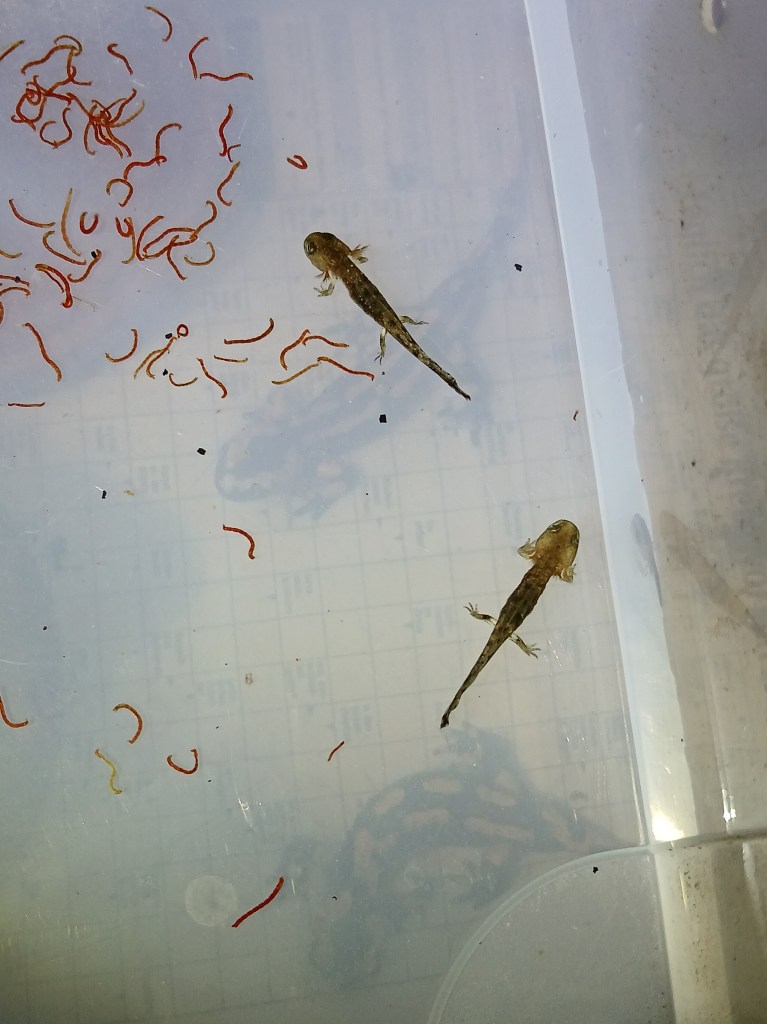
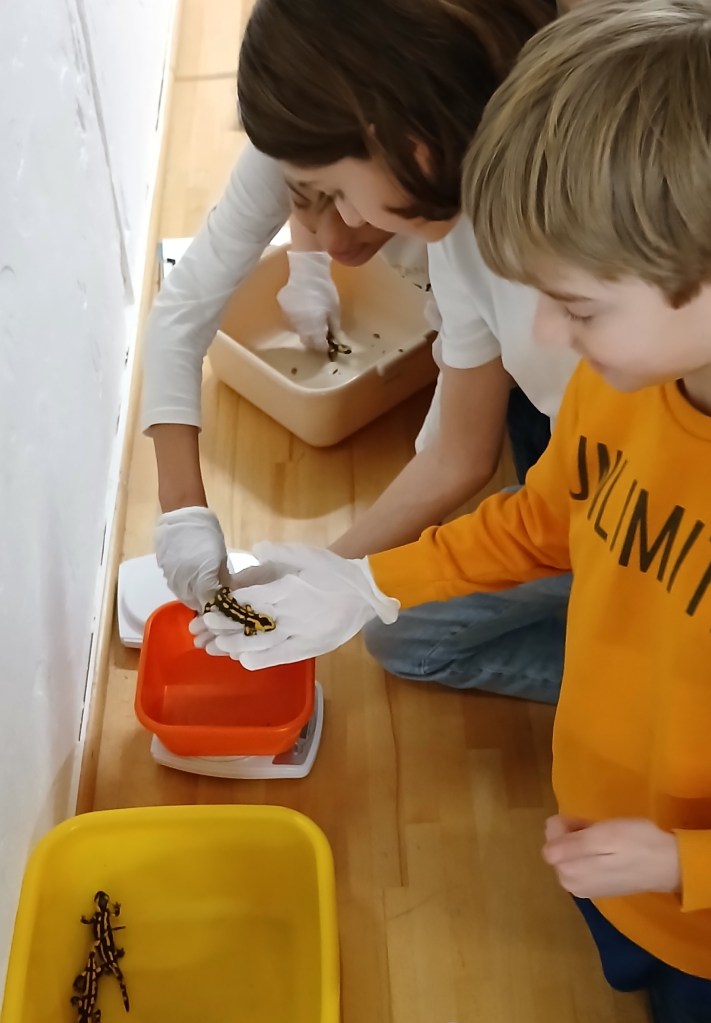
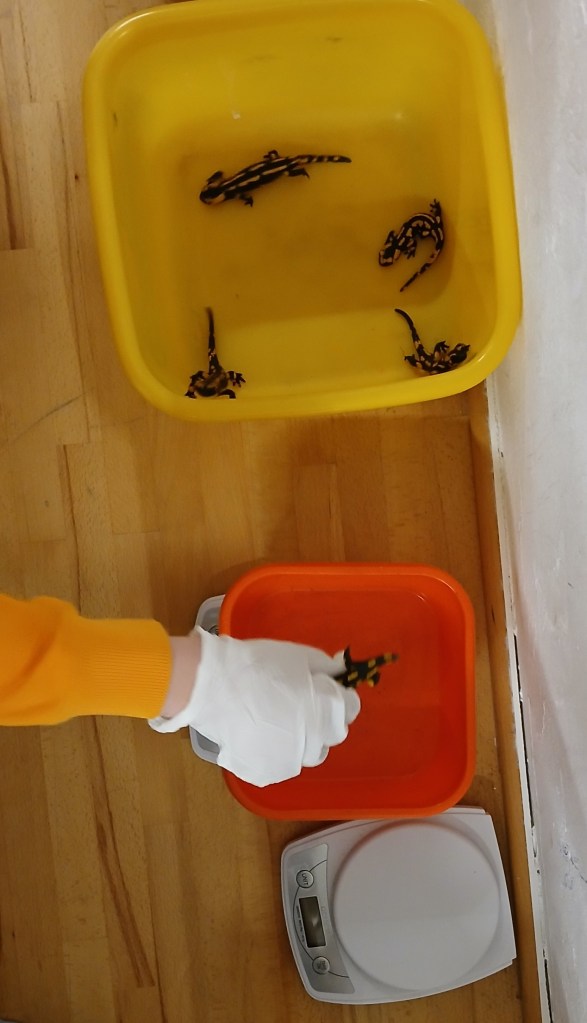
Hibernation is over and our fire salamanders are active again… Time to take stock and check whether the animals have survived hibernation well. After a thorough inspection, everything looks great! Our adult breeding female has also laid larvae in the water bowl. A great success and an indication that our husbandry parameters in the light well are just right. The larvae are first cared for by my own children at home before being loaned out to interested students at our school for breeding.
December, 19th 2025
Weihnachtsgrüße aus dem Lichtschacht
Auf der Homepage von Frogs and Friends und auf Feuersalamander.net wird von dem Feuersalamander Projekt am Gymnasium am Waldhof berichtet.
December, 12th 2025
In memory of Dr. Michael von Tschirnhaus (1939–2025)
I recently received the sad news that Michael von Tschirnhaus passed away on September 16, 2025, at the age of 86. Michael was head of the Biological Collection at Bielefeld University from 1981 to 2004 and a friend, mentor, and role model for me.
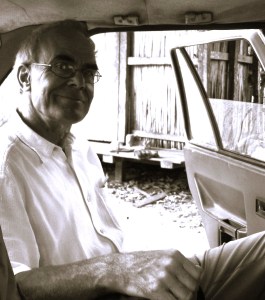
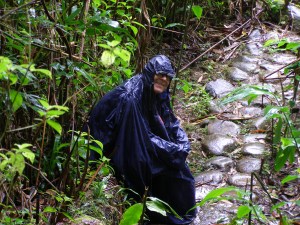

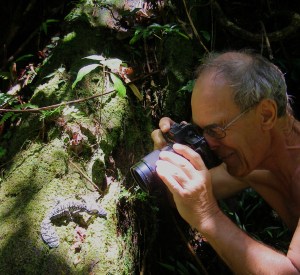
I had the good fortune to get to know Michael during my biology studies at Bielefeld University, when he taught us in the species identification courses. I was particularly impressed by his almost limitless expertise on virtually all living creatures on earth. But it wasn’t just his knowledge that fascinated me, it was also Michael’s unique, captivating manner, which drew us in even when discussing seemingly unimportant topics such as the anatomy of fly genitals.
In 2004 and 2006, Michael accompanied me on my first two trips to Madagascar. These expeditions were incredibly valuable to me, as I benefited not only from his deep experience and knowledge, but also from the many stories and experiences he had gathered in the most remote regions of the world. But even smaller excursions, such as those to the Bielefeld area or to the bird migrations on the North Sea coast, have remained vividly in my memory.
With tireless dedication and remarkable species knowledge, Michael von Tschirnhaus built up the biological collection at Bielefeld University and compiled its numerous exhibits. As one of the world’s leading dipterologists, he leaves behind a unique legacy. His extensive collection of insects, which is now managed by the Michael von Tschirnhaus Insect Collection at the Senckenberg German Entomological Institute (SDEI), is particularly valuable and of inestimable scientific value.
Dear Michael, thank you for accompanying me on my journey. Your passion for nature and your knowledge will always remain in my memories.
October, 30th 2025
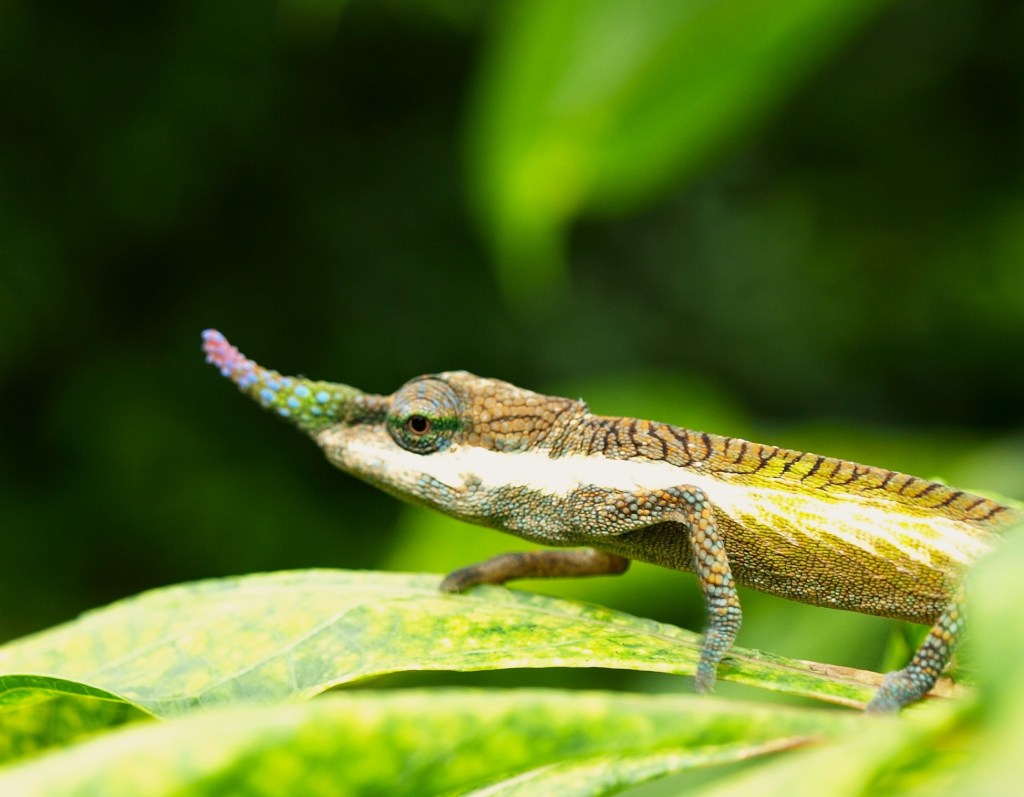
A great day… I am delighted that our latest study on the small chameleons from the Calumma nasutum and Calumma gallus group has been published today in the Salamandra Journal. It has now been 15 years since I began to study this group of chameleons intensively. One of the pictures shows the title slide of a lecture I gave in 2010. At that time, it was already clear that the taxonomic situation was completely confused and that there were a lot of cryptic species in this group. However, it was only through the use of the latest genetic methods to analyze DNA material from the type material that this Gordian knot could be untangled. Unfortunately, the results also mean that some old familiar identities have to be reassigned and two new species added: Calumma hofreiteri and Calumma pinocchio. Sorry for that!
You can find the entire study here:
https://salamandra-journal.com/index.php/new-contents
 psgehring.com